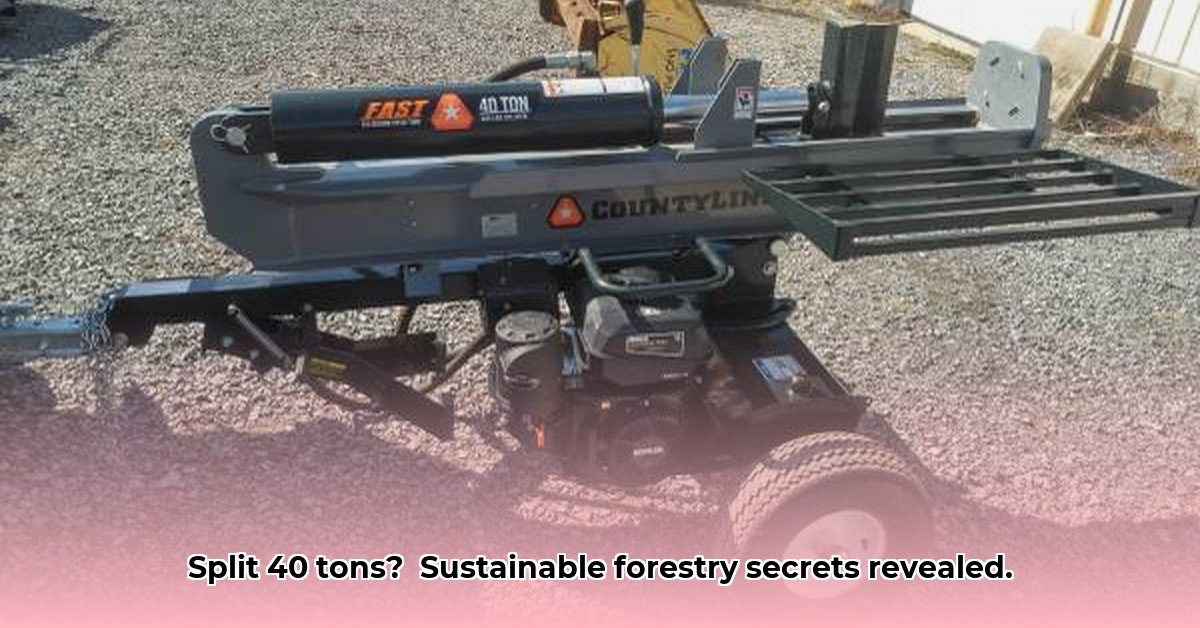
This comprehensive guide empowers you to efficiently and sustainably process wood using the Tractor Supply 40-ton log splitter. We'll cover safety, operation, maintenance, and environmentally conscious practices, ensuring you maximize your machine's benefits while minimizing your environmental footprint. Efficient log splitting isn't just about productivity; it's about responsible forestry. For added storage, check out these log rack options.
Safety First: Prioritizing Your Well-being
Operating a 40-ton log splitter demands utmost caution. Your safety is paramount. Before starting, equip yourself with appropriate Personal Protective Equipment (PPE). This includes sturdy work boots, gloves, safety glasses to protect your eyes from flying debris, and hearing protection to safeguard your ears from the machine's noise. Long sleeves and pants are crucial for skin protection.
Before each use, thoroughly inspect the log splitter for damage or leaks. Clear the work area of obstacles. Maintain a safe distance while the machine is running, and never reach into the splitting area during operation. Locate the emergency shut-off switch and know how to use it instantly. Negligence can have severe consequences. Remember, safety isn't just a suggestion; it's a necessity.
Setting Up and Operating Your Log Splitter: A Step-by-Step Guide
Proper setup and operation are crucial for efficiency and safety. A well-executed process minimizes waste and maximizes productivity.
- Level and Stabilize: Find a firm, level area for setup, preventing tipping.
- Secure Power Connection: Connect the power source securely, following the manufacturer's instructions precisely, ensuring stable power.
- Log Selection: Choose logs appropriate for the splitter's capacity. Avoid excessively large or knotty wood to prevent jams and optimize performance. Smaller logs are easier and speed your work.
- Feeding Logs: Carefully feed the logs into the splitting ram slowly and steadily. Keeping your hands and body clear of the splitting area prevents accidents.
- Post-Split Removal: After splitting logs, carefully remove them to prevent accidental injury or machine damage.
- Fluid Check: Regularly check the hydraulic fluid level and top off as needed using the recommended fluid from your owner's manual. Regular checks save you time.
Maintenance and Troubleshooting: Ensuring Peak Performance
Regular maintenance prevents costly repairs and ensures the longevity of your log splitter.
- Fluid Levels: Regularly check and maintain the correct hydraulic fluid level. Low fluid can damage components.
- Ram and Wedge: Inspect the wedge and ram for wear and tear. Prompt attention to damage minimizes risk.
- Cleaning: Keep the area around the splitter clean, removing debris to prevent accidents and ensure efficient operation. A clean workspace is a safe workspace.
- Troubleshooting: Familiarize yourself with common issues (hydraulic leaks, engine problems) and solutions using your owner's manual. Address minor problems immediately to avoid costly repairs, saving you money in the long run.
Sustainable Forestry Practices: Minimizing Your Environmental Impact
Sustainable forestry is about more than just splitting logs; it’s about responsible resource management.
- Wood Sourcing: Prioritize sustainably harvested wood. Responsible sourcing protects forests, ensuring their long-term sustainability.
- Waste Management: Minimize wood waste by precisely assessing your needs and repurposing waste (e.g., firewood, mulch). Efficient cutting practices reduce waste wood.
- Fuel Choices: Consider the environmental impact of your fuel. Gasoline has several drawbacks.
- Oil Disposal: Dispose of used oil properly to avoid environmental contamination; this protects our water resources from pollution.
- Energy Conservation: Regular maintenance reduces energy waste through efficient operation.
Don't forget that efficient use of the log splitter minimizes the total time and energy required for wood processing, directly contributing to sustainable forestry and reducing the machine's overall environmental footprint.
Exploring Alternative Fuels & Technologies: Greener Choices
While gasoline is common, consider greener alternatives.
| Fuel Type | Pros | Cons | Sustainability Impact |
|---|---|---|---|
| Biodiesel | Renewable, reduced emissions | Availability, potential higher cost | High |
| Electricity | Zero emissions during use, quieter operation | Higher initial cost, potential grid dependency | Very High |
| Gasoline | Readily available, relatively inexpensive | High emissions, non-renewable | Low |
Choosing a sustainable fuel option significantly reduces your environmental impact, aligning your wood processing with environmentally friendly practices.
Frequently Asked Questions (FAQ)
| Question | Answer |
|---|---|
| How much wood can I split in an hour? | This depends on log size, wedge sharpness, and your skill level. Expect variability. |
| What if my log is too large? | Don't force it! Cut the log into manageable pieces. |
| What type of hydraulic fluid to use? | Always consult your owner's manual. |
| What is the machine's warranty? | Refer to your purchase documentation or contact Tractor Supply for warranty information. |
Remember, responsible and safe use of your Tractor Supply 40-ton log splitter is key to efficient and environmentally conscious wood processing. By following these guidelines, you contribute to sustainable forestry while achieving your wood-splitting goals.